Mission & Vision
Transforming Waste Into Valuable Resources Through Circular Economy
Transforming Waste Into Valuable Resources Through Circular Economy
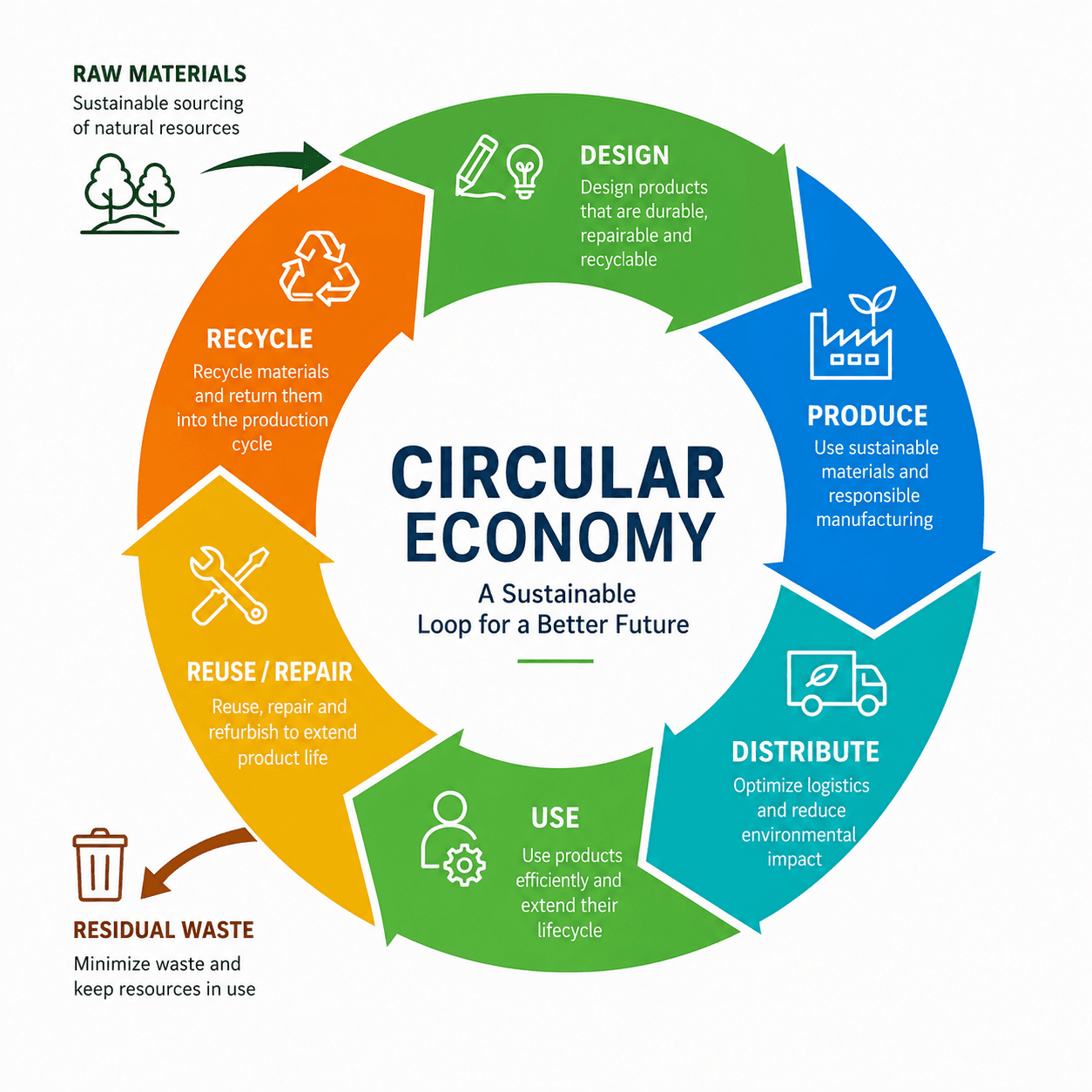
At TrashBin Pvt. Ltd., we follow the principles of a circular economy to reduce environmental waste and maximize the reuse of valuable resources. Instead of disposing materials into landfills, our system focuses on recovering, recycling, reusing, and transforming waste into sustainable products and reusable industrial materials.
Our circular economy approach begins with efficient waste collection and segregation where recyclable materials are carefully separated from general waste. Using advanced recycling technologies and eco-friendly processing methods, we convert plastic, metal, paper, construction waste, and other recyclable materials into useful resources.
By promoting reuse, repair, recycling, and sustainable production systems, we help conserve natural resources, reduce carbon emissions, minimize landfill waste, and support long-term environmental sustainability.
Through innovation and responsible waste management, TrashBin Pvt. Ltd. continues building cleaner cities, greener industries, and eco-conscious communities while encouraging sustainable living practices for future generations.
Understanding The 7R Principles For Sustainable Waste Management And Circular Economy
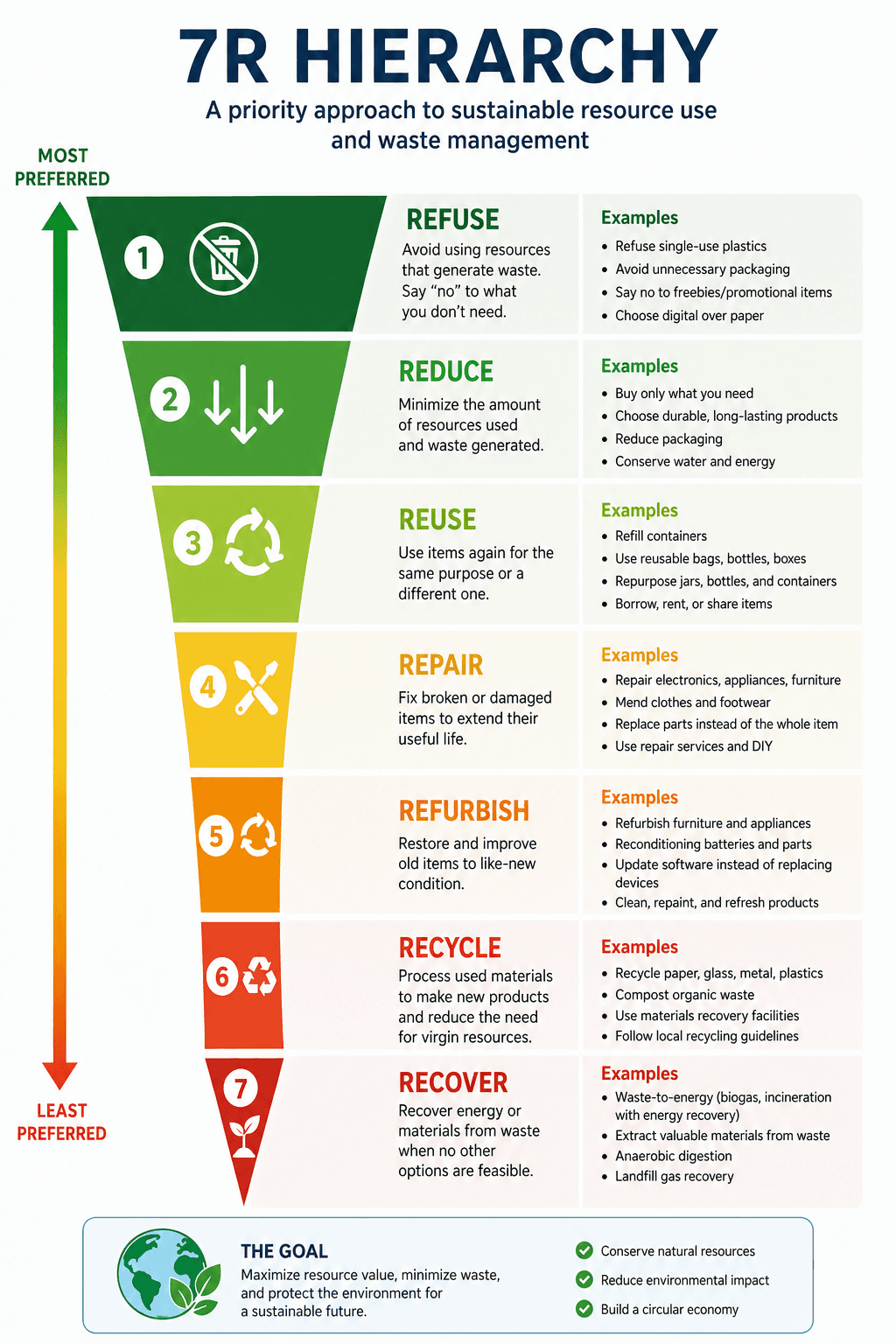
The 7R Hierarchy is a modern sustainability framework that helps individuals, businesses, industries, and communities reduce waste, conserve natural resources, and protect the environment through responsible consumption and recycling practices. The system focuses on minimizing waste generation while maximizing resource efficiency at every stage of a product's lifecycle.
The first principle, Refuse, encourages avoiding unnecessary products, single-use plastics, excessive packaging, and non-essential materials that create environmental pollution. By refusing waste before it is generated, organizations can significantly reduce landfill pressure and resource consumption.
Reduce focuses on minimizing the use of energy, water, raw materials, and disposable products. This principle promotes smart consumption habits, efficient manufacturing, sustainable production systems, and waste reduction strategies that lower environmental impact and operational costs.
Reuse encourages using products multiple times instead of discarding them after a single use. Reusable bags, containers, furniture, office supplies, industrial materials, and packaging solutions help extend product life cycles while reducing waste generation and resource extraction.
Repair supports fixing damaged or broken items rather than replacing them immediately. Repairing electronic devices, machinery, furniture, clothing, and household products helps conserve valuable resources, reduce manufacturing waste, and promote cost-effective sustainability practices.
Refurbish involves restoring old or used products into improved working condition for extended usability. Through refurbishment processes, businesses can upgrade equipment, renew industrial components, and recondition products to reduce unnecessary disposal and support circular economy systems.
Recycle converts waste materials such as plastic, paper, glass, metal, rubber, and electronic waste into reusable raw materials for manufacturing new products. Recycling reduces landfill waste, conserves natural resources, lowers pollution, and supports environmentally responsible production systems.
The final principle, Recover, focuses on extracting energy or useful materials from non-recyclable waste through modern waste-to-energy technologies, biogas systems, and resource recovery processes. Recovery helps reduce environmental damage while creating alternative energy and sustainable waste management solutions.
By implementing the 7R Hierarchy, organizations and communities can build cleaner cities, improve environmental sustainability, reduce carbon emissions, promote responsible resource management, and contribute toward a smarter circular economy for future generations.